
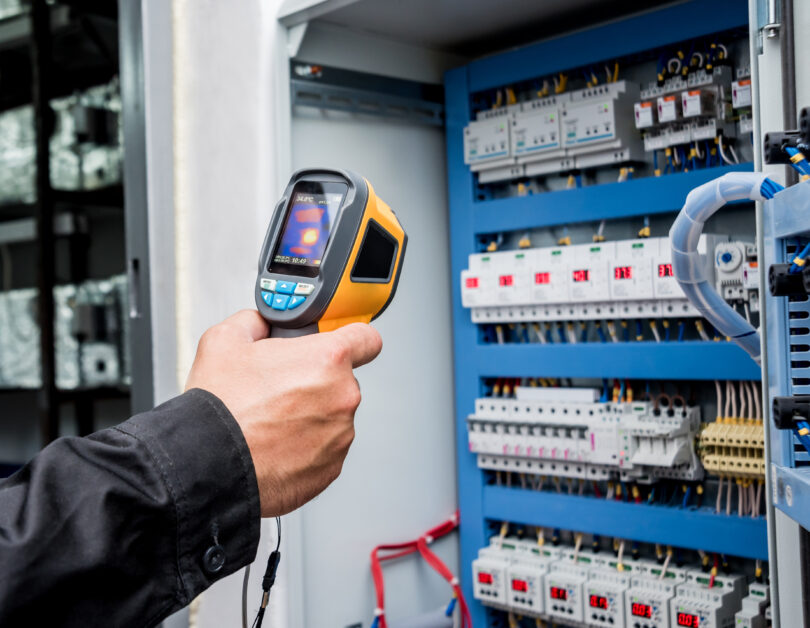

Running a commercial building can at times feel like juggling. You have complaints from tenants, compliance checks, and increased pressure to lower operational costs. But what about the issues you can’t see?
Hidden faults in your electrical or mechanical systems just don’t usually announce themselves until they fail. Unfortunately, these failures are often spectacular and expensive. That’s where thermal imaging comes in.
This is more than a fancy diagnostic tool. For the facilities manager and building owner, it could be the difference between a planned repair and a catastrophic 3AM emergency. By making the invisible visible, routine heat scanning transforms maintenance from a reactive firefighting activity into a proactive strategy that saves money and, quite literally, saves lives.
What Is Thermal Imaging and How Does It Work?
In a nutshell, infrared technology is the detection of temperature differences that the human eye cannot see. Everything emits heat energy. When a component starts failing-whether it is a corroding wire or a friction-heavy bearing-it usually produces more heat compared to healthy components.
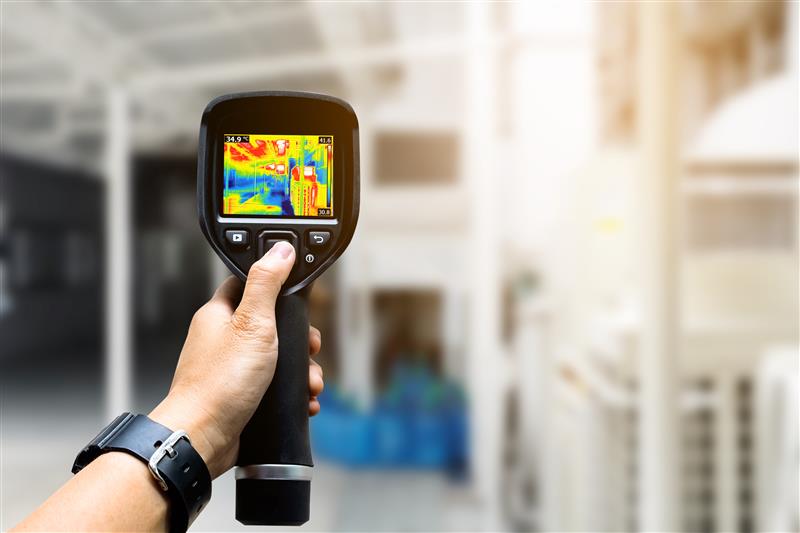
Thermographic inspection captures these infrared radiation patterns and translates them into a visible image, called a thermogram. According to the Department of Energy, this lets technicians identify surface temperature variations that show underlying defects. It is a non-invasive way to identify potential trouble before it shows up as an operational breakdown.
Utilising professional thermal imaging may help building managers spot these kinds of anomalies in everything from electrical panels to mechanical motors and even in the building envelope itself, all this without disrupting operations. It forms the foundation of a modern predictive maintenance program, moving you away from “fix it when it breaks” to “fix it before it matters.”
Key Benefits of Routine Thermal Scanning Inspections
Why should you budget for scanning before something breaks? The answer is risk mitigation.
Enhancing Safety and Preventing Hazards
Electrical fires rarely occur without warning; they often simmer for weeks or even months as “hot spots”. UK-based thermography specialists identify that thermal cameras can detect overheated components, such as faulty wiring or overloaded circuits, very well in advance of sparking a fire.
By identifying these hazards early, you protect both your tenants and your asset from devastating accidents.
Reducing Operational Risk and Costs
Unplanned downtime is a surefire budget killer. When a critical pump fails or a switchboard blows, business stops, but the costs don’t. High-rise maintenance experts pinpoint that predictive maintenance helps you avoid such “disruptive downtimes.”
You can catch a wearing part during a scheduled scan, order a replacement, and install it off-hours. This simple step helps you avoid emergency call-out fees and rush charges.
Supporting Compliance and Insurance Requirements
Many insurance companies now require an annual thermographic inspection in order to gain and maintain coverage; this is particularly so for commercial properties that carry high electrical loads. Routine scans demonstrate due diligence, helping you meet OH&S audit requirements and potentially lowering your premiums.
How Often Should Commercial Buildings Be Scanned?
There is no “one size fits all” schedule, but the general rule is simple: don’t wait for a problem.
Most commercial facilities have an annual inspection for major electrical switchboards and critical mechanical systems. In reality, though, the frequency should reflect the risk profile of your asset. Six monthly scans often provide value in high-rise buildings or facilities with aging infrastructure when there is a risk of rapid degradation.
According to industry analysis on vertical maintenance, in complex environments such as high-rises, it is highly critical to stay ahead by regularly scanning the stresses that an electrical riser and distribution system are subjected to.
Additionally, if you have recently retrofitted equipment or significantly increased your power load, a baseline scan should be performed immediately, followed by routine checks to monitor changes over time.
Applications of Thermal Imaging in Commercial Buildings
You might primarily associate heat scanning with fuses and wires, but it extends throughout a facility for utility.
Electrical Systems
This is the most common use case. Technicians seek out “hot spots” caused either by loose connections, oxidised contacts, or load imbalances. As building inspection professionals have noted, catching these loose connections early can prevent power outages and protect sensitive equipment from damage.
Mechanical Equipment
Friction produces heat. An under-lubricated motor bearing or a misaligned shaft will show up bright red on a thermal camera. Inspection technology providers indicate that it is particularly effective for HVAC components, such as compressors and condensers. This ensures your climate control systems don’t fail during a heatwave.
Building Envelope
It’s not simply a question of what’s inside the walls, but it’s about the walls themselves, too. Thermal imaging can find missing insulation, air leaks around windows, and even moisture intrusion that could lead to mould. Identifying these issues helps in improving energy efficiency and occupants’ comfort.
Implementing a Thermal Scanning Program
These are the pieces of equipment that would cripple operations if they were lost. Integrating this into your facility management plan doesn’t have to be complicated. First things first, identify your critical assets.
Then, hire qualified technicians. The cameras are powerful, but interpreting the images requires certification and experience to know the difference between a harmless reflection and a dangerous fault. And finally, make sure your provider offers clear, actionable reports. You don’t need a folder full of colourful pictures; you need a prioritised list of repairs.
Finally, close the loop. Use the insights from the report to schedule repairs. When the repairs are completed, re-scanning of the equipment is paramount to ensure the fix was indeed successful. This may be one of the most important steps that is often overlooked.
Proactive Building Maintenance Pays Off
Safety, compliance, and cost efficiency are just buzzwords that have carved their niches as cornerstones to successful facility management. Regular thermal scanning represents a clear path to all three.
See the heat before you feel the burn of an emergency; keep your building running smoothly and your budget on track. Don’t wait for a failure to force your hand. Schedule your inspection today.