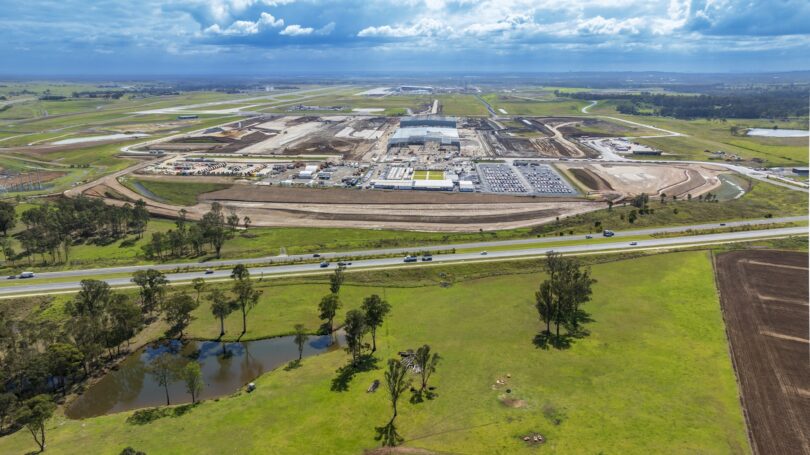

For years, Western Sydney International (Nancy-Bird Walton) Airport has been one of those big projects you hear about on the news – large-scale plans, billions in investment, new transport links, and a promise that it will “change everything.”
But now, as the terminal takes shape and the supporting infrastructure moves into its final stages, the conversation is shifting. This is no longer a far-off idea. The airport is opening in 2026, and the changes are already beginning to ripple through Western Sydney and surrounding regions.
What often gets overlooked is how deeply an airport can influence the everyday economy and not just tourism or aviation, but main streets, small businesses, jobs, services, hiring, freight, local suppliers, and community growth.
And while Liverpool will be one of the suburbs closest to the runway, the effects will reach far beyond it. Many communities across NSW are poised to benefit from what this airport represents: a once-in-a-generation shift in how people live, work, and do business.
This article explores how Western Sydney Airport is expected to reshape local economies, why major infrastructure projects unlock more than transport upgrades, and what small business owners can do now to prepare for the opportunities ahead.
Major Infrastructure Projects Transform More Than Transport
When people think about a new airport, they typically imagine planes taking off, new terminals, or shorter drives to catch a flight. But modern airports play a much bigger role in regional development.
Independent analyses on the Western Sydney Airport project have highlighted several layers of economic influence.
Construction investment: Billions are being spent on building the airport, the roads, the rail connection, utilities, and the surrounding employment zones. This activity provides work for trades, suppliers, subcontractors, and service providers well before the airport opens.
Operational jobs and daily activity: Airports support far more than aviation jobs, and the biggest gains often come from the flow-on effect. When thousands of workers move into a region, nearby cafés, trades, cleaners, transport operators, childcare centres, and professional services all see higher demand. This is why airports are considered economic anchors – they lift entire local economies, not just the precinct surrounding the runway.
Business attraction: Companies that rely on freight, mobility, and fast travel often relocate near airports. Over time, this forms new commercial precincts.
Urban growth: Where there is long-term employment, new housing follows. Schools grow, community services expand, and amenities increase.
Time savings: For Western Sydney residents and businesses, having a second international airport can significantly reduce travel time to an airport for many residents and businesses in Western Sydney, and that time translates into productivity gains.
Visitor spending and regional reach: Tourists, domestic travellers, and business visitors generate revenue for restaurants, accommodation providers, event venues, and regional attractions.
These layers build on each other. The impacts don’t arrive all at once – they accumulate over years, in small and large ways. But when you improve connectivity for an entire region, you also improve opportunity.

Western Sydney Airport: A Catalyst for Long-term Economic Growth
Western Sydney International will open with the capacity to handle 10 million passengers a year. It will operate 24 hours a day, unlike Sydney Airport, which must comply with an overnight curfew.
This alone makes it a major gateway for NSW, and the economic footprint extends far beyond the terminal.
The Western Sydney Aerotropolis
Around the airport, the Western Sydney Aerotropolis is being developed on more than 11,000 hectares of land. Plans outline a new economic hub featuring:
- Advanced manufacturing
- Logistics and distribution
- Agribusiness
- Defence and aerospace
- Education and research
- High-tech industries
- Commercial services
Earlier government modelling and planning documents have outlined significant employment projections:
- More than 16,000 jobs on the airport site by 2033, covering airport operations, retail, hospitality, and related services
- Growing to over 69,000 jobs on-site by 2055 as operations scale
- Up to 200,000 jobs across the wider Western Sydney Aerotropolis by 2036, spanning advanced manufacturing, logistics, education, technology, and commercial services
These numbers give a sense of scale. Even if the final figures differ, the direction is clear: this airport is a long-term jobs engine for Western Sydney and NSW.
The 2026 Trigger
Once the first flights begin, the airport’s influence will grow year by year. Freight demand, passenger numbers, commercial leases, new developments, and new services all ramp up progressively.
This is why many businesses (even those not located in Western Sydney) are already making plans.
How Local Economies Across NSW Can Benefit
You don’t need to live near the runway to feel the impact of a second major airport.
Here’s what communities across NSW could expect over the coming decade.
More jobs and more people
As thousands of workers relocate or commute to the airport precinct, the surrounding suburbs will grow. That brings increased demand for healthcare, education, retail, home services, trades, childcare, real estate, and hospitality.
Stronger supply chains
For regional producers, exporters, and online sellers, having a second international gateway means more freight capacity, new export pathways, and reduced pressure on the existing airport.
Regional NSW food producers, manufacturers, and wholesalers could all gain from quicker routes to domestic and global markets.
Tourism uplift
Visitors landing directly in Western Sydney may explore new destinations, not just the traditional CBD corridor. Regional towns offering experiences, food, nature, and events are well-placed to capture new audiences if they market themselves effectively.
Small business formation
Where population and employment rise, entrepreneurship follows. More startups, more home-based businesses, and more local services will naturally emerge around new economic activity.
B2B opportunities
New precincts need everything – cleaners, electricians, IT specialists, HR consultants, logistics providers, designers, web developers, mechanics, equipment hire, and more.
Small operators who are reliable and easy to work with have a real chance to partner with new firms moving into the area.
Why Digital Visibility Will Matter for Every Small Business in Australia
Even if your business is not in Western Sydney, customer behaviour is shifting.
Workers entering new precincts, visitors landing in the west, and companies expanding into the region will all begin their search online. This means:
- Local search (near me queries) becomes critical
- Clear website information becomes essential
- Reliable online reviews carry more weight
- Social media visibility influences discovery
- Mobile-friendly websites become non-negotiable
This is why many small businesses seek help from experienced digital partners. A Sydney-based agency like Netplanet Digital supports organisations with content, strategy, branding, and local search visibility. They understand how major infrastructure projects can shift customer behaviour, and how to prepare early.
You don’t need to outsource everything, but the essentials matter:
- Keep your Google listing updated
- Ensure your website loads fast
- Make your services easy to understand
- Show your coverage areas and capabilities
- Write content that answers real questions
- Maintain a solid presence on at least one social platform
Being easy to find and easy to trust is one of the simplest advantages you can give yourself as the region grows.
What Small Businesses Can Do Now – Practical Steps
You don’t need a complex plan. Start with things you can control today.
- Review your service areas: Look at postal zones, new suburbs, industrial precincts, and whether you could realistically serve or deliver to growing areas.
- Strengthen your branding: Even small improvements like clearer messaging, cleaner visuals and better signage help customers feel confident choosing you.
- Update your website: This includes mobile performance, contact details, service descriptions, FAQs, and new photos. A clean, updated site signals reliability.
- Prepare for new kinds of customers: Hospitality venues may see more travellers. Trades may receive commercial enquiries. Retailers may see new foot traffic. Anticipate, don’t react.
- Build partnerships: Collaborations with nearby businesses can help you handle bigger contracts or serve new markets as they emerge.
- Keep an eye on development timelines: Changes won’t happen in one big wave. They arrive stage by stage. Planning around those milestones gives you an advantage.
Creating better opportunities for Western Sydney and New South Wales
Western Sydney Airport won’t magically solve every challenge small businesses face, nor will it transform the entire state overnight. But it does represent something meaningful: a long-term shift toward decentralised growth, more local jobs, greater access, and new economic possibilities.
If you are a small business owner in NSW, this is a moment worth paying attention to. You don’t need to overhaul your business. You don’t need to rush. But by making the right improvements now, you put yourself in a good position to benefit as the ripple effects start to show.
Looking at everything we’ve covered, it’s clear that change is coming, steady, realistic, and full of potential. With the right preparation, small businesses across NSW can be part of a more connected and progressive future.