
We once did a whole range at Lonely Kids Club called Velcro World. The idea was to have Velcro sections sewn onto T-shirts and hats, then sell packs of patches with Velcro backs so people could swap them around.
It tanked massively.
We ended up selling it all at massive reductions. We’d also had all the Velcro sections hand-sewn onto the products, so there was a lot of money invested in it before we’d sold anything. We lost a lot on that range.
It’s a good example of why I prefer printing to order wherever we can.
The problem with making stock before you have customers
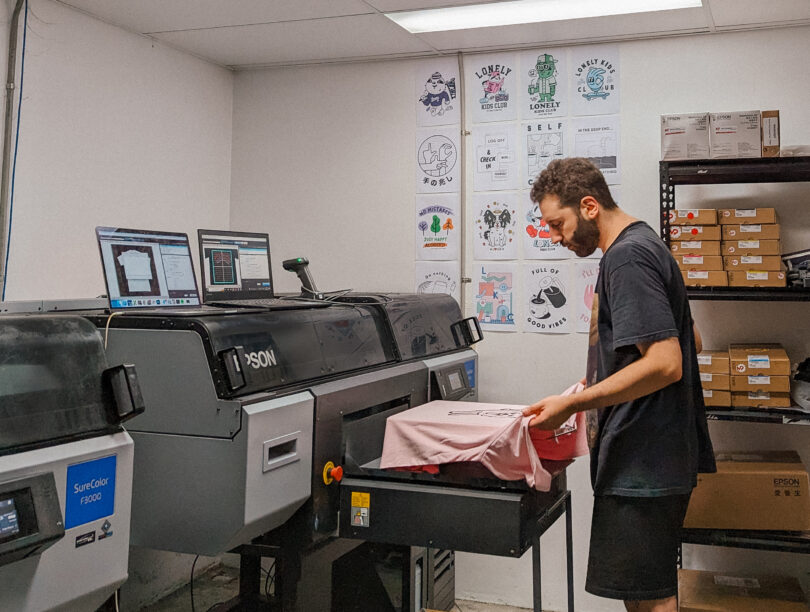
I started Lonely Kids Club in 2011. We print our graphic tees to order in our Sydney studio, although we’ve tried other products and ideas over the years too. With the tees, someone chooses a design, size and colour, and then we make their order.
We still buy blank garments. There’s stock to pay for and sizes and colours to keep available. But a blank black tee can be used for lots of different designs. We haven’t committed it to something that might not sell.
With Velcro World, we’d already paid to turn the garments into a very specific product. When people didn’t buy them, we couldn’t just use them for something else.
That matters when you’ve still got wages and rent to pay. Reducing everything might get some money back, but you’ve already spent the money making it. We sold the range off at a loss.
More freedom to experiment — but printing to order also has challenges
With our printed designs, we can release something and make however many people order. If that’s only a few, we haven’t got another fifty printed in sizes nobody wanted.
It gives us room to work with artists and make things for smaller audiences. We have designs for some fairly specific interests. They don’t all need to be big sellers to stay available, because we can keep printing them individually.
The harder part is getting everything made after the orders come in. We do the printing ourselves in Sydney, so we’re responsible for the whole process.
Each garment needs preparing, printing, curing, checking and packing. If a print goes wrong, we need to do it again. The equipment needs maintenance, and when we’re busy there’s only so much we can physically get through in a day.
We need to explain that to customers and be realistic about when their order will leave. Having the blank tee ready doesn’t mean the finished product is ready to send.
It also means our prices have to cover the work. Paying staff and artists fairly matters to me. I can’t just count the garment and ink and ignore the time someone spends preparing it, printing it or packing the order.
Sustainability is another reason we work this way. I don’t like producing things that end up sitting around unwanted. We still use materials and hold blanks, and mistakes happen. But with our designs, we can wait until someone actually wants the tee before printing it.
What 15 years in business has taught me
I wouldn’t say making to order works for everything. Velcro World needed work done upfront. A smaller run would have reduced how much we lost, but we still would have needed to make some stock.
For our printed tees, though, it suits us. We can offer different designs without having piles of each one sitting in the studio. It helps with cash flow and gives us more freedom to try things.
After 15 years, I’m comfortable saying that putting time and money into an idea doesn’t guarantee people will want it. With printing to order, we can find that out without paying to make a whole range first.