
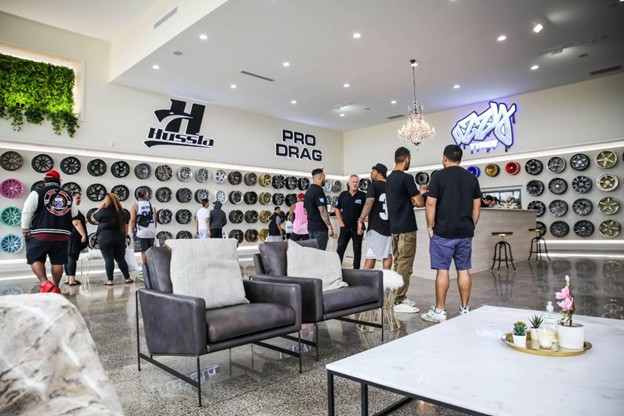

Franchising has long been positioned as a shortcut to entrepreneurship: buy into a proven system, inherit the brand, and follow the formula. But the reality is more complex and far less forgiving. Just ask Hussein Chahine, founder and director of Ozzy Tyres, a national automotive retail network built on a tightly held franchise model.
While the broader franchise sector employs nearly 600,000 Australians and turns over an estimated $174 billion annually (Franchise Council of Australia, 2023 State of Franchising Report), it is also riddled with quiet failures and underperformance. According to the latest ABS figures, 13.9 per cent of Australian businesses closed in the 2024–25 financial year, underscoring the fragility of small enterprises even within structured models (Australian Bureau of Statistics, 2025).
Despite the apparent accessibility of franchise ownership, many new operators underestimate the operational, cultural and financial discipline required to succeed. The perception of a “business-in-a-box” often leads to mismatches between franchisors and franchisees. Misaligned operators dilute brand equity, strain support systems and contribute to internal churn—a pattern noted in the most recent Review of the Franchising Code of Conduct by the Department of Treasury.
In this environment, sustainable franchising is less about speed of expansion and more about the strength of the system underpinning it. For Chahine, who has spent two decades building and refining Ozzy Tyres’ owner-operator network, that system rests on five pillars: selecting the right people, embedding consistent mentorship, fostering transparency, investing in the right tools, and growing with purpose.
1. Choose People, Not Just Sites
The most sustainable franchise models are built on strong operator relationships, not just footprint expansion.
“We don’t just open stores. We create legacy businesses,” says Chahine. “Franchising isn’t about selling sites. It’s about backing people to build something extraordinary.”
This means rejecting a volume-based approach to recruitment and instead seeking out operators who are aligned with the brand’s culture, standards, and long-term vision.
“We receive franchise enquiries every day, but we turn down more than we accept,” Chahine explains. “We look for people who genuinely care about their customers and want to build something meaningful. This business runs on passion and integrity, not quick wins.”
2. Embed Ongoing Mentorship
Beyond initial onboarding, consistent support is essential for long-term franchisee success. This includes structured one-on-one mentorship, operational reviews, and business coaching.
“Mentorship doesn’t just improve the bottom line. It builds belief,” says Chahine. “When people know you’re in their corner, they show up with more confidence and consistency.”
Franchisees benefit from regular goal-setting and strategy sessions, as well as opportunities to learn from peers in group forums. These initiatives build business capability while reinforcing a sense of shared purpose across the network.
3. Make Performance Visible
Transparency is another cornerstone of successful franchise systems. Sharing real-time data across the network such as sales performance, customer feedback, and key operational metrics can help franchisees understand what’s working and where improvements are needed.
“Transparency builds trust,” says Chahine. “When everyone can see each other’s results, it creates accountability and motivation. It keeps our culture healthy and our standards consistent.”
This approach also encourages high performers to lift the network, creating a sense of internal momentum and constructive competition.

4. Standardise Tools That Drive Innovation
Innovation doesn’t need to be flashy. It needs to be useful. In a well-run franchise model, tools and systems are standardised to reduce complexity and support operators in delivering a consistent customer experience.
“Our goal is to give every store the same world-class tools and experience, whether you’re in Sydney, Perth or Townsville,” says Chahine. “When the technology, the mentorship and the culture all align, the results speak for themselves.”
This includes centralised marketing platforms, AI-powered product fitment tools, and interactive digital customer experiences—systems designed to streamline operations while enhancing service.
5. Grow with Purpose, Not Just Speed
According to IBISWorld, the Australian franchising industry is expected to generate $201.2 billion in revenue in 2025–26. However, the sector has seen an annualised decline of 1.2 per cent over the past five years, as economic conditions and consumer expectations shift IBISWorld, 2025.
“We’re not interested in growth for the sake of it,” says Chahine. “We open stores that are built to last, with people who want to grow alongside us.”
Franchise models that prioritise alignment over acceleration tend to outperform over time. For Chahine, strong retention is the ultimate marker of health.
“It’s not just about how many join. It’s about how many stay,” he says.
Final Thoughts
Franchising is not a shortcut to success. It’s a partnership model that only works when people, systems and purpose align. The strongest networks are those that select carefully, support consistently, and scale deliberately. In a market where exits remain high and growth is no longer guaranteed, building a franchise that lasts takes more than strategy. It takes shared values, clarity of vision, and a commitment to playing the long game.